Ravenloft: The Horrors Within — D&D's Spookiest 2026 Release Yet, If You Can Tolerate the Rehash
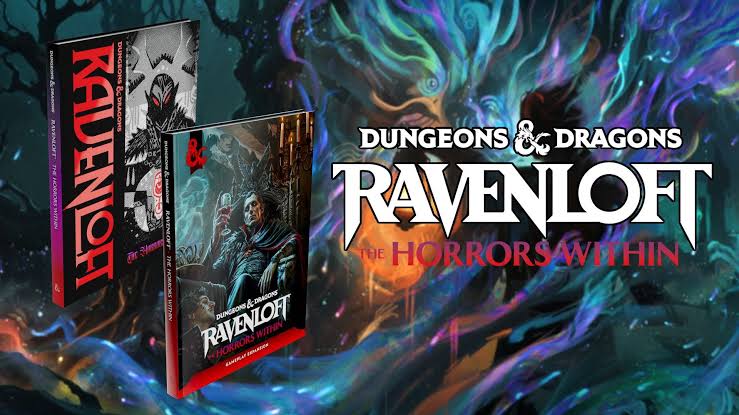
Strahd von Zarovich is back. The mists have rolled back in. And if you’ve been waiting for D&D 2024’s first major setting book of 2026, here it is: Ravenloft: The Horrors Within — a 288-page sourcebook that drops into your hands like a heavy, leather-bound coffin.
It’s D&D’s kickoff for the Season of Horror, a themed release cycle that runs through Q3 2026. If you run horror campaigns, love gothic atmosphere, or just want a book that looks absolutely stunning on your shelf — read on. I’ve spent time with both the digital and physical versions, and I have thoughts.
What It Is
Ravenloft: The Horrors Within is a setting sourcebook for the Domains of Dread — Ravenloft’s pocket-dimensional multiverse where every nightmare gets its own haunted sandbox. Each domain is ruled by a Darklord, a tragic or terrifying entity trapped in an endless cycle of suffering.
Think of it as a campaign-building toolbox rather than a linear adventure. There’s no single plot to follow. Instead, you get 16 Domains of Dread with lore, adventure hooks, and stat blocks — enough material to build a dozen different horror campaigns. The book targets D&D 2024 (sometimes called 5.5e), so it’s incompatible with the original 2014 rules without some translation work.
If you owned Van Richten’s Guide to Ravenloft from 2021, the ghost of that book haunts every chapter here. The overlap is significant — we’ll talk about what that means for your wallet.
What’s Included
Here’s the breakdown of what’s packed into those 288 pages:
Player Options
- 7 subclasses total — 5 returning and 2 genuinely new
- Returning: College of Spirits Bard, Grave Domain Cleric, Phantom Rogue, Shadow Sorcery Sorcerer, Undead Patron Warlock
- Brand new: Reanimator Artificer (a Dr. Frankenstein-style necromantic companion builder) and Hollow Warden Ranger (a melee-focused ranger who draws power from the forgotten dark)
- 4 playable species — Dhampir, Hexblood, Reborn, and Lupin (wolfish humanoid, first official 5e appearance since 3.5e)
- 4 backgrounds — Haunted One, Investigator, Mist Wanderer, and Spirit Medium
- 10 Dark Gift feats — Ravenloft-specific features with a twist: each comes with a narrative consequence
- Bonus: D&D Beyond subscribers get the Artificer class as a digital bonus
DM Tools
- 16 Domains of Dread — each with full lore, color-coded art, Tarokka card pairings, and adventure hooks
- 17 Darklord stat blocks — including Strahd, Lord Soth, Azalin Rex, Viktra Mordenheim, and yes — Cthulhu presiding over a brand-new Innsmouth domain (the headline everyone’s talking about)
- 51 monsters — a mix of new creations and reprinted horrors from the last book
- 8 new Bastion facilities — including a new “haunted room” mechanic that adds atmosphere to your stronghold
- 10 horror genre frameworks — Body Horror, Cosmic Horror, Psychological Horror, and more — with guidance on building custom Domains of Dread
- 17 one-shot adventures — one per domain, designed to introduce players to each setting
Art & Physical Quality
This is where the book truly shines. The art is frighteningly good — fully saturated pages with cohesive color palettes per domain. Each domain gets its own visual identity, and the Tarokka deck integration is a beautiful touch. If you’ve been disappointed by the physical quality of recent D&D releases (looking at you, Forge of the Artificer), this one is a massive step up. It’s a collector’s item whether you use it at the table or not.
First Impressions
The moment you open the cover, the art grabs you. I’m not being dramatic — this book looks better than any D&D sourcebook I’ve owned. The fully saturated color spreads for each domain feel like stepping into a gothic painting. The cover art alone — Strahd mid-feast, candlelight bleeding into shadow — is a knockout.
The writing quality is solid, though the lore section feels familiar if you’ve read Van Richten’s Guide. Many of the same domains, the same Darklords, many of the same monsters. What’s new is the depth — the 16 domains get proper treatment here where Van Richten’s gave them lighter coverage. The cosmic horror and Body Horror genre additions are genuinely fresh takes on the setting.
One disappointment: the Dark Gift feats feel underpowered. They’re thematic and fun to read, but mechanically they don’t deliver the punch you’d expect from a feat. Some consequences also feel unevenly applied — one curse is a minor inconvenience, another is a genuine character handicap. Your DM’s discretion will matter a lot here.
How It Works at the Table
The new subclasses are the crown jewels. The Hollow Warden Ranger is particularly well-designed — it finally gives Rangers a satisfying melee build that doesn’t depend on Hunter’s Mark for viability. The Reanimator Artificer is less mechanically tight but compensates with pure creativity: stitching together battlefield corpses into golem companions is the kind of weird, flavorful gameplay that makes D&D special.
The returning subclasses are improved across the board. The College of Spirits Bard still has its randomness issues, but it’s better than before. The Grave Domain Cleric is solid but unremarkable. The Undead Patron Warlock delivers a genuinely satisfying necromantic package.
The Bastion haunted room mechanic is a standout feature for players who already have strongholds. Having your workshop or library “haunted” — requiring cleansing rituals before your Bastion powers activate — is a brilliant way to weave Ravenloft atmosphere into non-Ravenloft campaigns.
For DMs, the 17 one-shot adventures are a mixed bag. Some are atmospheric and tight; others feel like skeleton outlines that need significant DM prep. They’re best used as inspiration rather than ready-to-run modules. If you want a complete adventure, Curse of Strahd (updated for 2024) remains the gold standard — and this book’s companion product rather than replacement.
The Darklord stat blocks are the most contentious element. Reviewers are split: the new versions are consistent with 2024’s monster design philosophy, but many feel they’re weaker than their 2014 predecessors. Strahd has been noticeably nerfed, and Lord Soth followed a similar trajectory. If you’re planning an epic final boss fight, you’ll likely need to buff these yourself. The loss of lair actions and monster spellcasting in the 2024 revision hit the Darklords hard.
The Bottom Line
Ravenloft: The Horrors Within is, for better and worse, what you’d expect from a major D&D sourcebook in 2026. It’s gorgeous, packed with useful content, and represents the strongest setting book Wizards has released since the 2024 revision. But it’s also undeniably a rehash of Van Richten’s Guide to Ravenloft — same setting, same species, same subclasses, same monsters — just updated to the new rules.
Pros
- Absolutely stunning art — best D&D book design in years
- Two genuinely creative new subclasses — Hollow Warden and Reanimator are fun and unique
- 17 Darklord stat blocks — a first for Ravenloft, and incredibly useful
- Strong monster variety — 51 stat blocks gives you a real horror toolkit
- Haunting Bastion rules — brilliant flavor mechanic
- Cthulhu’s Innsmouth domain — cosmic horror is now officially part of Ravenloft
Cons
- Heavy overlap with Van Richten’s Guide — if you own the 2014 book, you’re paying for rule conversions, not new ideas
- Darklord stat blocks feel nerfed — you’ll need to buff Strahd for your table
- Dark Gift feats underdeliver — cool concept, weak mechanics
- One-shots need DM prep — more skeleton than skeleton key
- No new lore advancement — Ravenloft’s canon hasn’t meaningfully moved forward
- Pricey at $59.99 for the core book (Ultimate Bundle runs $149.99)
Who It’s For
Buy it if: you’re migrating to D&D 2024 rules and want a proper Ravenloft sourcebook. If you’ve never owned Van Richten’s Guide, this is the book to get — it’s a bigger, more comprehensive package with genuinely better art. DMs planning a horror campaign will find the genre frameworks and Darklord stat blocks invaluable.
Skip it if: you already own Van Richten’s Guide and aren’t moving to 2024 rules. You’ll be paying $60 for rule conversions and art appreciation. Also skip if you wanted a deep adventure module — this is a toolbox, not a campaign.
My verdict: 4 out of 5. It’s the best D&D 2024 expansion so far, and the Season of Horror releases (including the Tarokka Deck, DM Screen, and the upcoming Vampire: The Masquerade – Bound by Blood crossover in July) make this feel like one of the strongest content cycles Wizards has delivered. The book stumbles in places — inconsistent feats, weakened bosses, recycled content — but the art, the new subclasses, and the sheer volume of usable DM material make it a solid investment for anyone who runs the game.
Just don’t expect the mists to hide the fact that Wizards is mining their own graveyard. Again.
Where to Get It
- Core sourcebook — Amazon | Wizards of the Coast — $59.99
- Ultimate Bundle (sourcebook + Tarokka Deck + DM Screen + digital bonuses) — Amazon — $149.99
- Digital on D&D Beyond — D&D Beyond — $49.99 (includes Artificer class bonus)